
The London skyline is an ever-changing jigsaw of glass and steel. From the Gherkin to the Shard, working in the clouds offers prestige and breathtaking views. But when the lease expires, or it’s time to resize, the dream view can quickly become a logistical nightmare.
Moving an office is stressful enough on the ground floor. When you add 40 storeys, shared service lifts, and the bustling streets of Central London to the equation, the complexity skyrockets. Did you know that in Greater London, office occupiers move an average of just 3.5 miles to their new premises? Yet, that short journey can feel like a marathon if you aren’t prepared.
If you are an office manager or business owner facing a high-rise exit, you need to know exactly what you are up against. Let’s dive into the top 5 challenges of office furniture removal London and, more importantly, how to overcome them without losing your cool (or your deposit).
1. Are Your Goods Too Big for the Goods Lift?
It is the classic “pivot” moment, but with much higher stakes. High-rise buildings in the City or Canary Wharf are marvels of engineering, yet they often have surprisingly strict limitations on internal logistics.
Most skyscrapers have dedicated goods lifts, but they aren’t Tardises. They have rigid height, width, and weight restrictions. If your boardroom table is a solid slab of oak, it might not fit.
The Bottleneck: You are often sharing these lifts with deliveries for other tenants, cleaning crews, and maintenance teams.
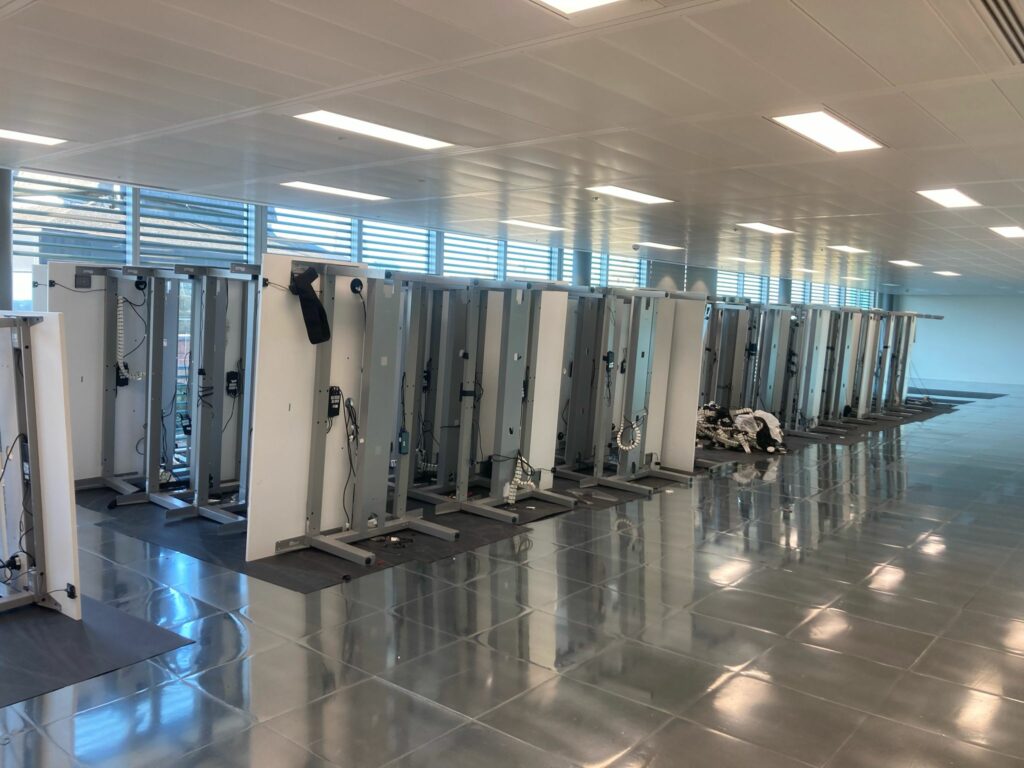
The Fix: Professional furniture disassembly is non-negotiable. An experienced office removal company will measure lift dimensions weeks in advance and dismantle workstations, pods, and meeting tables before they ever reach the elevator doors.
In extreme cases where items simply won’t fit, external furniture hoists (cranes) are required. In London, hiring these specialist hoists can cost double the regional average due to permits and safety requirements. You do not want to find this out on moving day!
2. Can You Dodge the Dreaded “Dilapidations” Bill?
“Dilapidations” is a word that strikes fear into the heart of every tenant. In the UK commercial property market, you are legally required to return the office to its original layout and condition.
This isn’t just about sweeping the floor. It involves stripping out partitions, removing data cabling, and repairing any wear and tear. With a massive 32 million square feet of London office leases expiring between 2025 and 2026, landlords are becoming stricter than ever on these inspections to ensure their assets remain competitive.
If you leave behind old furniture or fail to remove branding from a glass wall on the 30th floor, you could face a hefty bill for the landlord to do it for you, often at a premium rate. A specialist clearance service doesn’t just move you out; they ensure the space is stripped back to lease-compliant standards, saving you from a nasty post-move invoice.
3. Is Your Parking Permit Strategy Foolproof?
London’s streets are unforgiving. Between the Congestion Charge, the ULEZ (Ultra Low Emission Zone), and Red Routes, getting a 7.5-tonne lorry to your front door is a tactical military operation.
Commercial vehicles in London are statistically five times more likely to receive a parking ticket than anywhere else in the UK. Many loading bays in the City of London have strict time limits, often just 20 to 40 minutes for loading.
The Cost of Failure: A single parking bay suspension can cost between £150 and £300, and you often need to book them 4 to 6 weeks in advance.
The Reality: If your removal team turns up without the right permits, the move stops.
Reliable office removal specialists handle this bureaucracy for you. They know which boroughs require specific permits and how to schedule arrivals to avoid the rush-hour gridlock that costs the UK economy billions of pounds annually
4. How Do You Move Without Stopping the Cash Flow?
Time is money, especially in London. Every hour your server is down, or your team is without desks, you are losing productivity.
The challenge with high-rise buildings is that you are rarely allowed to move furniture during office hours because it disrupts other tenants. This restricts your move to evenings, weekends, or bank holidays.
Minimising downtime requires precision timing. You need a team that can execute a “lift and shift” over a single weekend, ensuring your team leaves the old office on Friday and walks into a fully operational new office on Monday morning. This isn’t just about muscle; it’s about project management.
5. What Happens to the Old Furniture?
This is the challenge that keeps modern CEOs awake at night: Sustainability.
Each year, the UK throws away roughly 1.6 million tonnes of bulky waste and furniture. Shockingly, only around 17% of discarded furniture is recycled. The rest ends up in landfill or incineration, which is a disaster for your company’s carbon footprint and broader Environmental, Social, and Governance goals.
Removing furniture from a high-rise isn’t just about getting it out of the building; it’s about where it goes next.
Reuse: Can it be donated to charity?
Resale: Is there a market for your high-end ergonomic chairs?
Recycling: Can the metal and wood be separated and processed responsibly?
Leading removal companies now provide waste transfer notes and sustainability reports, proving that your old desks didn’t just end up in a skip.
Why Choose Clear Workspace?
Navigating these challenges requires more than a “man with a van.” It requires a partner who understands the vertical complexity of London.
At Clear Workspace, we specialise in high-rise logistics. We don’t just move furniture; we manage the entire exit strategy. From sustainable disposal that boosts your green credentials to handling the tricky permit paperwork, we ensure your move is seamless. We understand that your focus should be on your business growth, not on measuring lift doors.
Ready to make your high-rise exit a breeze? Contact Clear Workspace today for a quote that covers everything. No hidden fees, no stress.